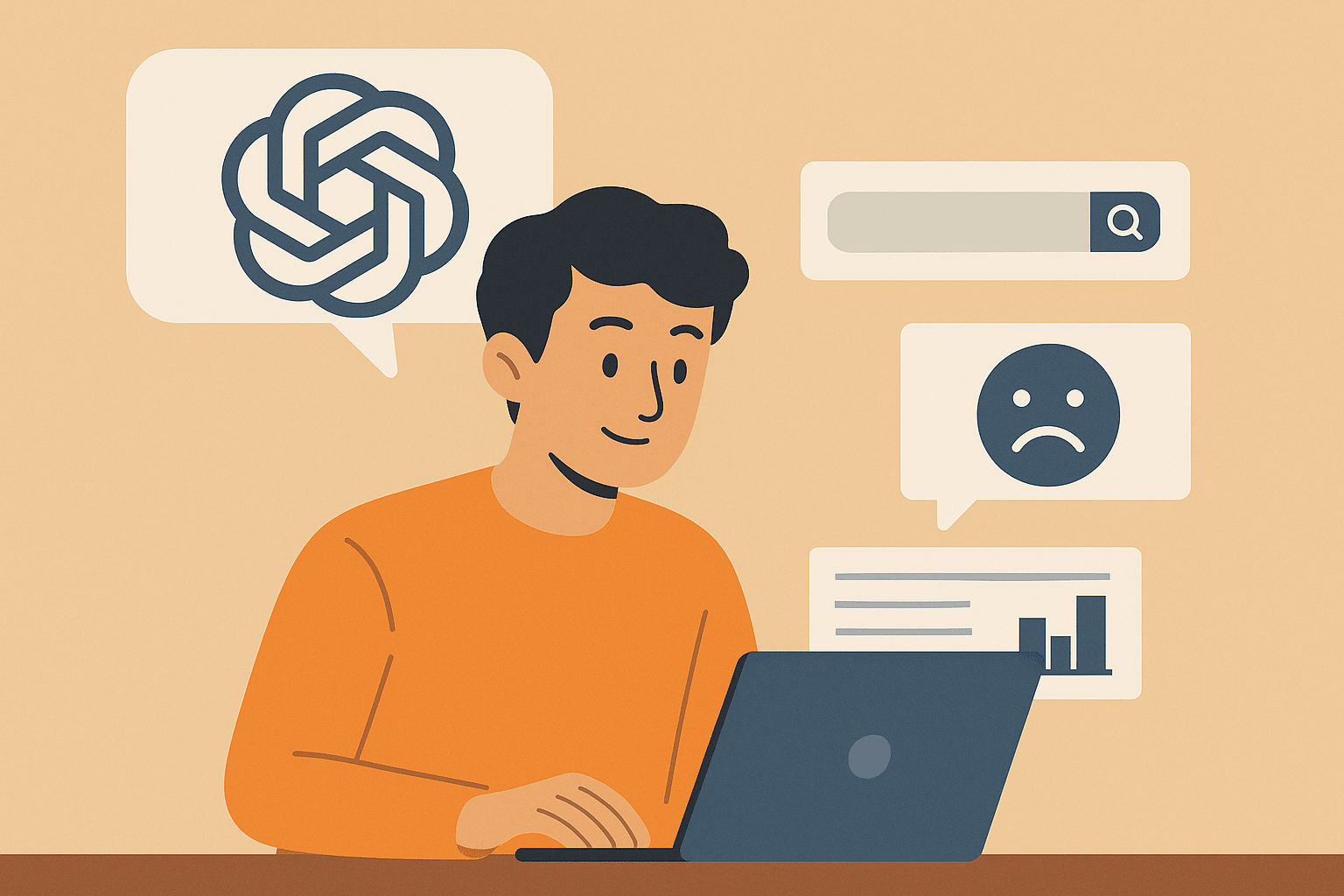
I like to think of ChatGPT as my $20-per-month assistant and advisor. While there are plenty of AI tools out there—like Perplexity for research or Gemini for Google integration—I’ve found that ChatGPT covers almost everything I need.
Instead of juggling multiple platforms, I stick to one that works. From daily tasks to creative projects, it’s become an essential part of my routine.
Why I Started Using ChatGPT
At first, I began using ChatGPT just to see what the hype was about. I didn’t expect much—just a bit of casual experimentation. But somewhere along the way, I got hooked.
As a B2B SaaS growth specialist and venture capitalist, around 60% of my work revolves around research, data analysis, and distilling all that information into meaningful insights. I constantly need to track market trends, sector advancements, and fundraising movements. It’s a process that usually eats up hours of focused time.
That changed the moment I started using ChatGPT seriously. What used to take half a day can now be wrapped up in under an hour. It didn’t just save time—it shifted how I work.
Supercharging My Workflow with Custom GPTs
While I initially turned to ChatGPT for research and data analysis, I quickly realized that was just scratching the surface. As I explored further, I began creating Custom GPTs—personalized versions of ChatGPT trained to work like mini-specialists on topics I care about.
To explain it simply: a Custom GPT is like teaching a robot to do a job exactly the way you like it, and then letting it do that job again and again. You give it instructions, examples, tone preferences—almost like setting up a new employee. But this one learns instantly and never forgets.
I’ve built Custom GPTs for writing email newsletter content, improving website SEO, and even managing the knowledge base of a SaaS product. For example, my Newsletter GPT knows the exact structure I want—because I fed it those instructions in its setup. Now, when I share raw points or ideas, it delivers newsletter drafts in my preferred format. No back-and-forth, no tweaking structure every time. Just results.
I also rely on ChatGPT to help with my blog articles. Some people might say that’s cheating—but I see it differently. I provide all the points, stories, and perspectives based on my real-life experiences. ChatGPT just helps me shape those into coherent, well-written pieces. It’s not replacing my voice—it’s helping me stay consistent, focused, and more productive as a writer.
Learning Without Judgment: My 24/7 Tutor
The world is full of complex topics—from finance and physics to tech infrastructure and economics. And while curiosity is a great asset, it’s often held back by a simple fear: the fear of looking dumb.
I don’t know about you, but I’ve definitely hesitated to ask a teacher or expert to explain something in the most basic terms—like they would to a kindergartner. There’s always that worry of being judged for not already knowing. But with ChatGPT, that fear disappears.
AI doesn’t judge you. You can ask it the “dumb” questions without flinching. If I’m struggling to understand something—say, how jet engines work—I just type: “Explain this to me like I’m five years old.” And it does. Patiently. Clearly. Sometimes with fun analogies.
And here’s the beauty of it: I walk away with actual understanding. That ability to break down complexity on demand has become a core part of my personal learning journey. It’s like having a judgment-free tutor in my pocket 24/7.
Where ChatGPT Falls Short (And Why That Matters)
As much as I rely on ChatGPT, I’ve learned that it isn’t perfect—and it’s important to know where its limits lie.
One major limitation I’ve run into is reliability of statistics. ChatGPT can generate numbers and even cite sources when prompted, but I’ve found that the accuracy of those stats can be questionable. It’s not uncommon for the sources to be vague, outdated, or just plain wrong. I’ve personally made the mistake—twice—of using statistics from ChatGPT without double-checking them online, only to realize later that they were incorrect. Since then, I treat GPT-generated stats as a starting point, not the final word.
Another area where ChatGPT falls short is emotional understanding. You can share your feelings with it—ask why you’re feeling a certain way or how to handle a rough day—and it’ll respond with thoughtful advice. But it’s not the same as talking to a friend, mentor, or therapist. There’s no genuine empathy, no real human connection. It can simulate care, but it can’t feel it. Maybe future AI will close that gap, but for now, it’s a tool—not a replacement for human presence.
Final Thoughts: A Powerful Ally, Not a Replacement
ChatGPT has become a powerful part of my personal and professional toolkit. From simplifying complex tasks to helping me stay consistent in content creation, it has transformed the way I approach my day. But it’s not a silver bullet. It doesn’t replace the need for critical thinking, human connection, or fact-checking.
Used wisely, ChatGPT is like having a brilliant assistant who never sleeps. Just remember: like any tool, its value lies in how you choose to use it.