I’ll be honest with you—my memory is far from stellar. If you ever ask me for a restaurant recommendation, chances are I’ll stare at you blankly like I’ve never eaten out in my life. Ask me to recommend a book? Same result. I can tell you exactly what I did yesterday or maybe even three days ago, but anything beyond that? My brain acts like those memories are locked behind a door I don’t have the key to. 🧠🔒
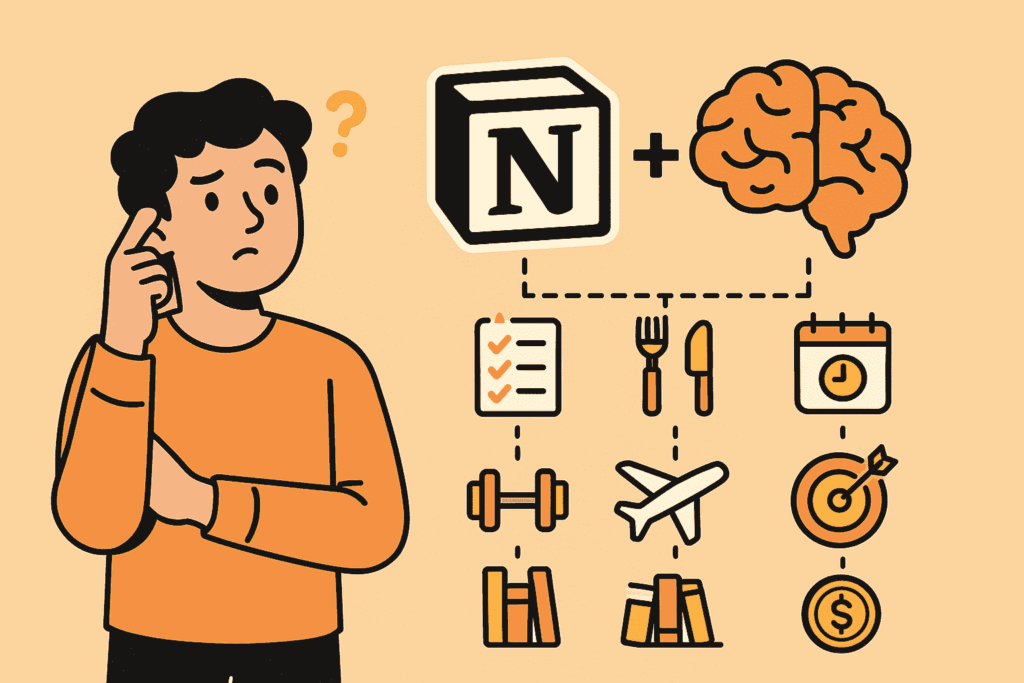
This limitation used to frustrate me, especially when I knew I had good experiences or insights—I just couldn’t retrieve them when I needed to. In Jan 2025, I stumbled across the concept of a “Second Brain” by Tiago Forte. It immediately resonated with me. The idea is simple in theory: your brain isn’t meant to store information, it’s meant to process it. So, instead of trying to remember everything, why not build a reliable external system that does it for you?
While the idea sounded brilliant, the actual implementation felt… intimidating. The examples I saw online looked over-engineered with complex tagging systems, databases within databases, and endless templates. I liked the promise of it all, but the design part? That seemed like a rabbit hole I wasn’t ready to jump into.
But in May 2025, I decided to give it a real shot. I challenged myself to build a simple prototype using Notion. And to my surprise—it wasn’t as complicated as I thought. I approached it with a step-by-step mindset, starting small and adding layers only as I needed them. Over time, the system matured. Today, it feels less like a digital notebook and more like a personal operating system.
So, what exactly do I keep in my Second Brain?
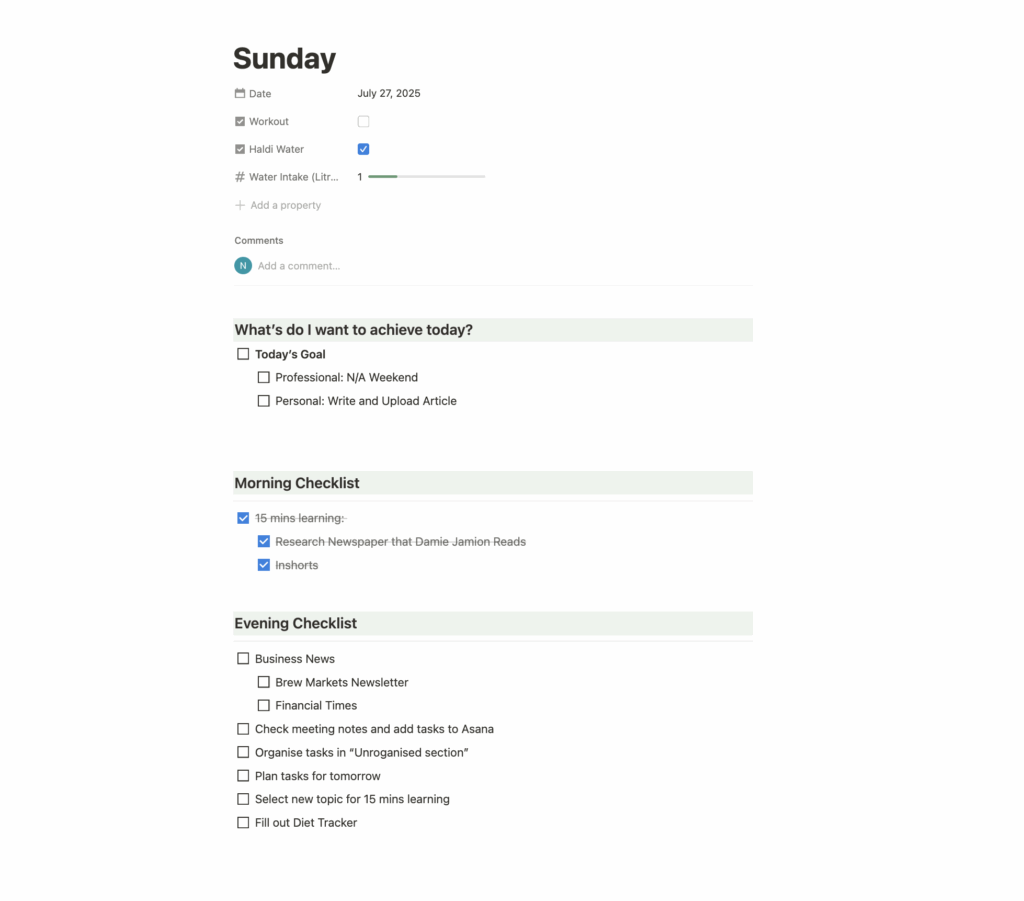
At the heart of it is my Daily Pages—an idea inspired by Tiago himself. Each day starts with a structured template where I define my main goals, go through a short morning checklist (including what I plan to read), track key habits like workouts and water intake, and end the day with an evening wrap-up. It brings a rhythm to my day and gives me a sense of closure each night.
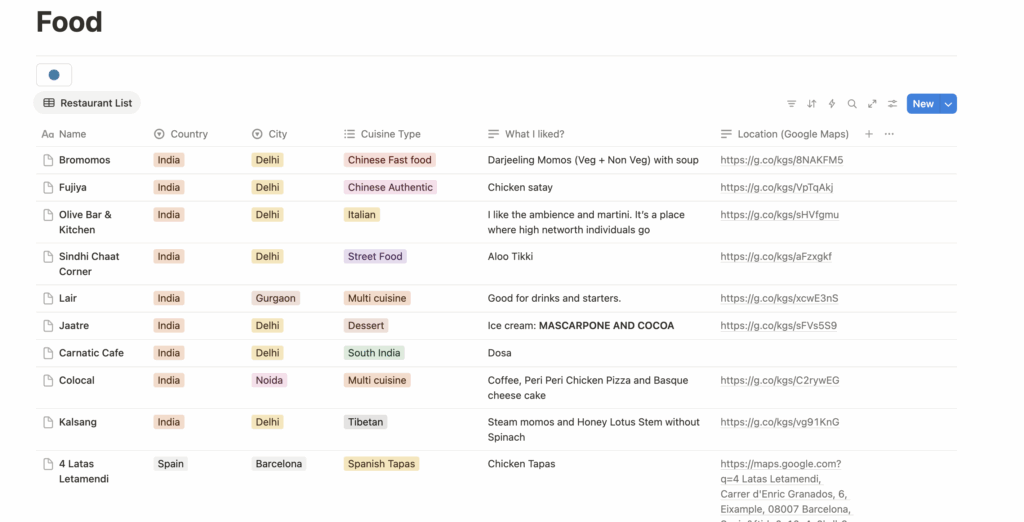
Then there’s the part that addresses my original pain point: recommendations. I’ve created a running list of my favorite restaurants, drinks, and even books—so the next time someone asks, I don’t blank out. I just search and share. Super efficient, and honestly a bit of a confidence booster.
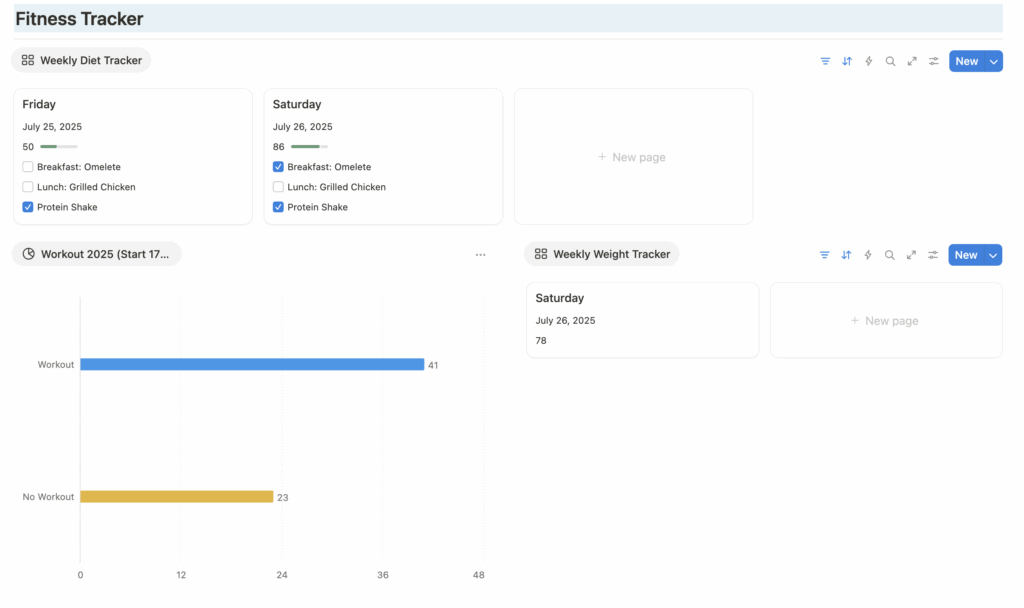
My Second Brain also doubles as a fitness tracker. It’s where I monitor my consistency with diet, protein intake, weight, and workout routines. Not just for accountability, but to actually see patterns forming over time.
Then comes the Resource Library. This is my personal archive of great articles, insightful videos, and other content I don’t want to forget. If something hits home or makes me go “huh, that’s good,” it goes into the library. And when I’m in need of inspiration or reference, it’s all right there.
I also started logging travel itineraries—where I went, what I spent, what I loved, and what I’d skip next time. It’s incredibly helpful when someone asks for travel tips, or when I’m planning a repeat visit.
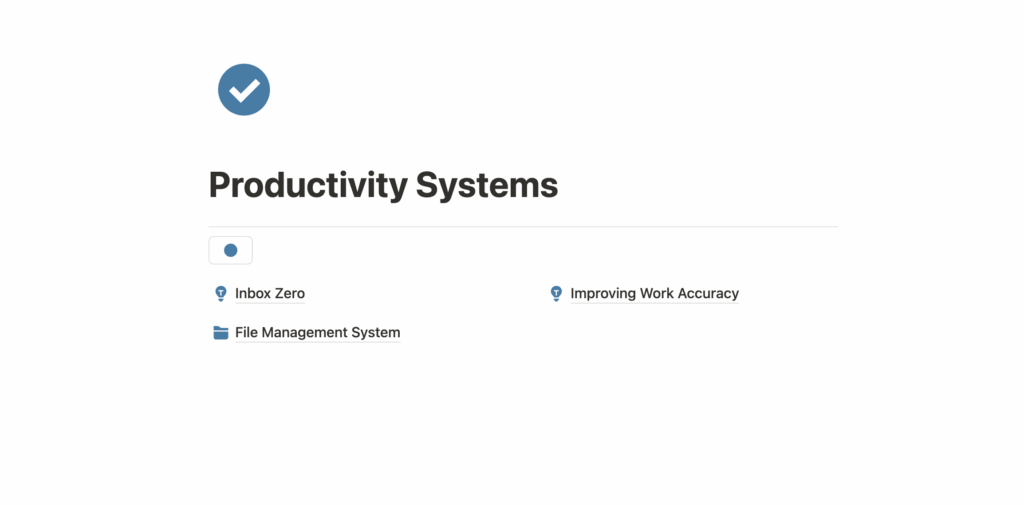
There’s a section dedicated to Productivity Methods—a kind of self-curated playbook of what’s worked for me. When I’m in a rut or need to recalibrate, I refer back to these notes and often find just what I need to get back on track.
And finally, my Finance section. It links out to my investment trackers, credit card reward logs, and other money-related dashboards. It’s not where I manage my finances per se, but rather where I keep the meta view of how I manage them.
Each piece of this system is simple on its own, but together they form something incredibly powerful: a personal knowledge base that I trust. It helps me remember, organize, and even think better. And best of all—it’s built for me, by me.
The Real Shift: Small Wins, Big Momentum
After just two months of using my Second Brain in Notion, I started to notice a quiet, steady shift. It wasn’t dramatic—but it was real. The act of filling out my Daily Pages each morning and night gave structure to my day in a way that felt energizing, not restrictive. I found myself chasing the satisfaction of checking every item off my list. And here’s the surprising part: on days I didn’t get everything done, I didn’t beat myself up. Instead, I felt a healthy motivation to do better the next day.
Some habits that used to be hit-or-miss finally found consistency. Take my morning routine, for example. I wanted to build a habit of drinking haldi water in morning, right after I wake up. With my Second Brain gently reminding me each morning, it became second nature. I also became more consistent with my office diet plan, tracking my protein intake, and noting small wins on the fitness front. Over time, I could actually see changes in my body—subtle but encouraging.
Of course, I never expected overnight results. That was never the goal. Systems like these aren’t magic—they’re slow burners. But what I did start noticing was that I was improving, just a little bit, every single day. That 1% better philosophy from Atomic Habits? This was it in action. And the best part is that the system gently nudges me forward without overwhelming me. It’s a calm accountability partner that never yells but always shows up.
Why Notion? Blame the Hype (But I’m Glad I Did)
You might be wondering: why Notion? Did I evaluate ten different tools and land on it after deep research? Not really. I used it because, well… everyone else seemed to be using it. It was trending, and I got pulled into the hype. 😄
But once I started building, I realized Notion actually was the right tool for me. The biggest win? Flexibility. I didn’t need to know how to code or rely on a “tech-savvy” friend to set things up. I could design every page, template, and system in a way that made sense to me. Want to jump from one section to another? I created buttons to do that in a single click—no need to go through a maze of indexes. Need a database that shows up differently on different pages? Notion handled it without a fuss.
The platform allowed me to keep my system fluid and evolving. As my needs changed, so did the structure of my Second Brain. It never felt rigid or locked in. And that, I think, is what helped me stick with it.
What I’ve Learned (and What’s Next)
If there’s one thing I’ve learned from this experience, it’s this: start small, and keep refining. You don’t need a perfectly polished system to begin—you just need to begin. Over time, the clarity comes, and the structure takes shape. Also, make it personal. Copying someone else’s setup might help you get started, but eventually, your Second Brain needs to reflect your brain, not someone else’s.
Another lesson? Consistency beats intensity. It’s not about building a perfect system overnight or filling out your pages with military precision. It’s about showing up—daily, honestly, and without judgment.