There’s a popular belief floating around the internet — one that says, “If you love what you do, you’ll never need a vacation from it.” It’s usually wrapped in aesthetic Instagram carousels or motivational tweets, and to be honest, I used to believe it too. When I first joined the workforce, I thought passion would be the antidote to exhaustion — that if I really, truly loved my job, fatigue would somehow not apply to me.
Years later, I can confidently say that idea is completely false.
Loving your work and getting tired from work are two entirely separate things. One is emotional, the other is physical. You can be insanely passionate about your craft — even worship it — and still feel drained, still need a break, still want to do absolutely nothing sometimes. And that’s not a sign of weakness or a lack of dedication. It’s biology.
Energy, not excitement, fuels our bodies. No matter how meaningful or exciting your job is, your body still has limits. It doesn’t care whether you’re building your dream business or stuck in a mundane corporate loop — it only knows how to respond to exertion, stress, and lack of rest. That’s why it’s humanly impossible to run on full throttle every day, all day. You might manage a 12-hour sprint for a few days, maybe even a week if you’re really lucky, but sooner or later, you’ll feel the dip. The crash comes — hard.
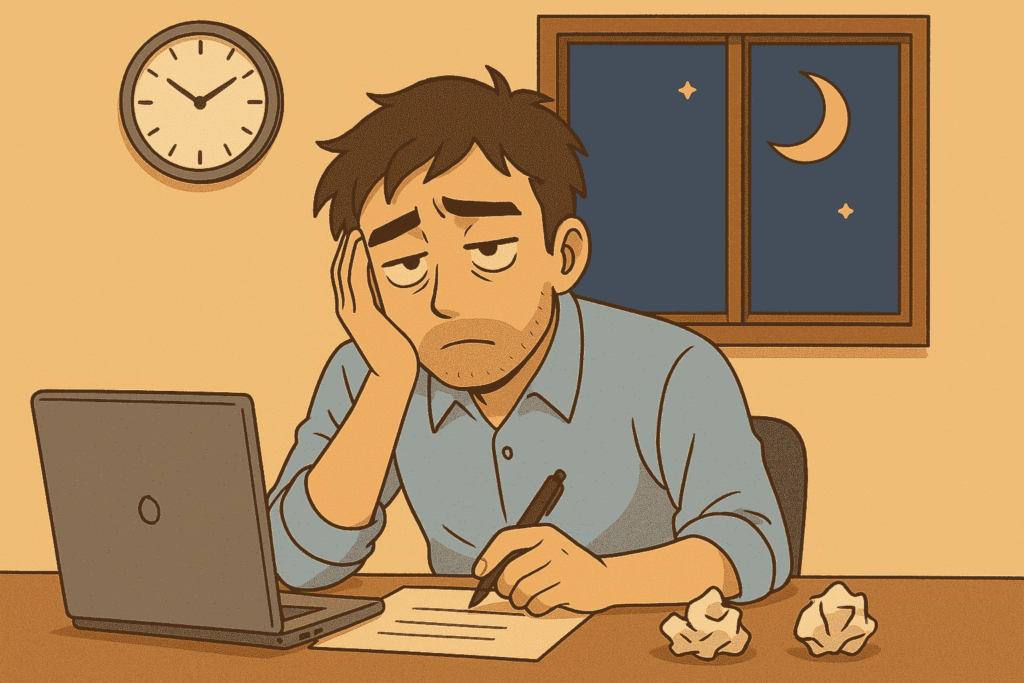
Take last week for example. I had to stay up late on Wednesday and Thursday, working on an investor deck. I wrapped up around 1:30 AM both nights. By Friday, my energy tanked. I dragged myself to the gym, but the spark was missing. I couldn’t focus at work. Even small tasks felt like a mountain. I wasn’t lazy — I was just tired. No amount of “but I love what I do” could override that.
And here’s another uncomfortable truth: even if you adore your work, there will always be parts of it you hate. I love closing deals, bringing in new revenue, and solving tricky issues in the Demand Generation process — the outcomes. But to get there, I have to do things I genuinely dislike: forecasting, building business models, chasing down contracts, and repeatedly experimenting to fix systems that refuse to cooperate. That’s the 50% of my job I love, and the 50% that just comes with the territory.
Ironically, it’s often that second 50% — the “boring stuff” — that drains me the most. Those repetitive, high-effort, low-reward tasks that don’t bring dopamine but are absolutely essential. That’s where the fatigue sets in, even though I know they’re tied to my bigger goals.
So no, the fact that you feel tired doesn’t mean you’re in the wrong job. It means you’re human.
When possible, I prefer spreading my workload into the weekend rather than forcing late-night marathons. Of course, that’s not always realistic — sometimes deadlines leave you no choice but to push through. But when the pressure allows, I’d rather work a few hours on Sunday than destroy my rhythm and recovery by staying up into the early hours on a weekday.
This article isn’t backed by research or data. It’s just my experience — the result of several personal experiments and real-life moments of trial and error. I’ve learned that passion is powerful, but it doesn’t make you invincible. And that’s okay.
If you’ve felt the same way — if you love your job but still crash sometimes — drop a comment. Let’s normalize the idea that being tired doesn’t mean being ungrateful. It just means being real.